
Complete Guide to Rice Milling Machine Production Line Configuration: Three Key Points to Help You Easily Get It Done!
2024-09-08
In the grain processing industry, the configuration of the rice milling machine production line is a crucial link. It not only concerns production efficiency and product quality but also directly affects the operating costs and market competitiveness of enterprises. Today, let's talk about how to easily complete the configuration of the rice milling machine production line. Just master the following three key points!
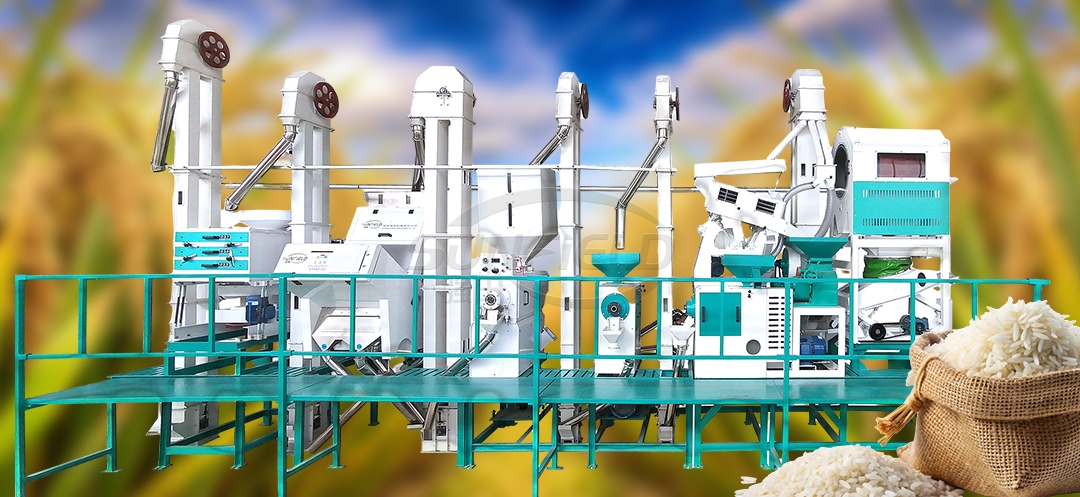
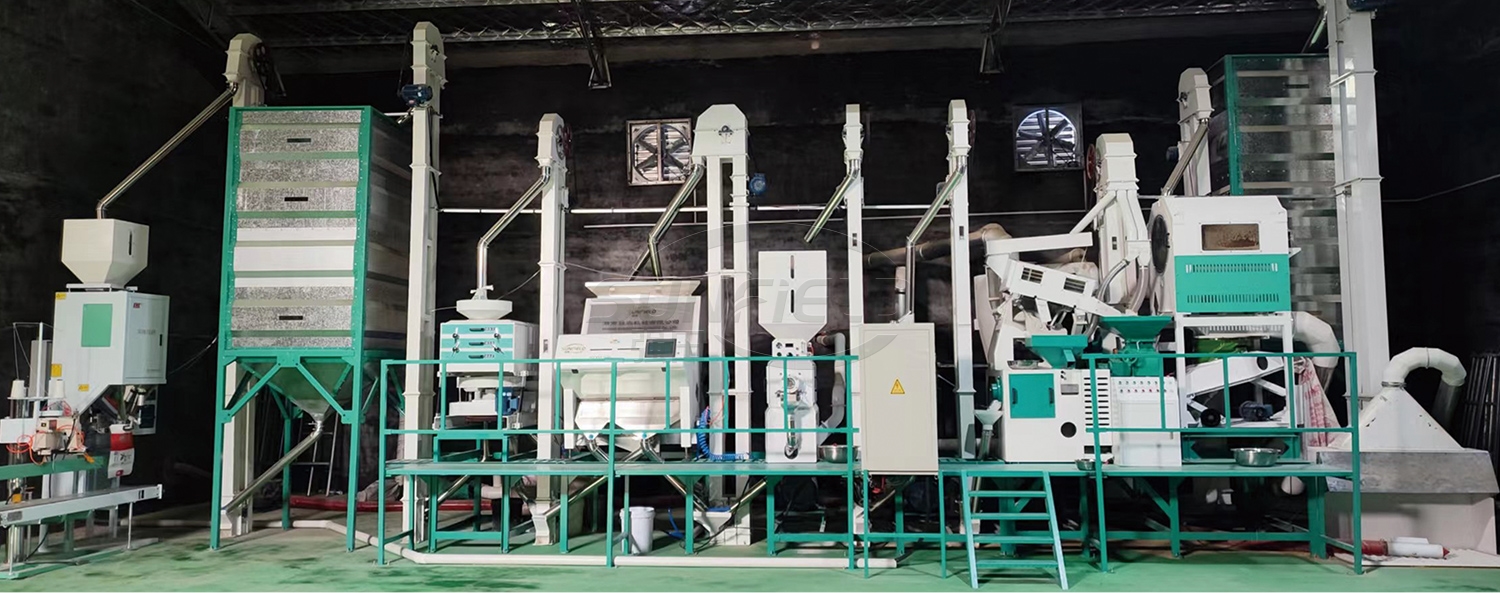
First, look at the factory building.
The factory building is the foundation of the rice milling machine production line. Its layout and structure directly determine whether the production process is smooth or not. When planning the factory building, the following aspects need to be considered:
Regional division: Reasonably divide processing areas, dust removal areas, packaging areas, etc., to ensure that each area has a clear function and does not interfere with each other. At the same time, reserve enough space for future equipment upgrades or expansions.
Platform height: According to the equipment size and operator's height, design a reasonable platform height, which is convenient for equipment operation and maintenance and can reduce personnel fatigue.
Ventilation and lighting: Ensure good ventilation in the factory building to reduce dust accumulation; at the same time, provide good lighting conditions to ensure production safety and quality.
The factory building is the foundation of the rice milling machine production line. Its layout and structure directly determine whether the production process is smooth or not. When planning the factory building, the following aspects need to be considered:
Regional division: Reasonably divide processing areas, dust removal areas, packaging areas, etc., to ensure that each area has a clear function and does not interfere with each other. At the same time, reserve enough space for future equipment upgrades or expansions.
Platform height: According to the equipment size and operator's height, design a reasonable platform height, which is convenient for equipment operation and maintenance and can reduce personnel fatigue.
Ventilation and lighting: Ensure good ventilation in the factory building to reduce dust accumulation; at the same time, provide good lighting conditions to ensure production safety and quality.
Second, look at the output.
Daily output is an important basis for customizing rice milling machine models. Different models of rice milling machines have different processing capabilities and efficiencies. Therefore, when choosing equipment, it needs to be matched according to the actual needs of the enterprise:
Accurate calculation: Accurately calculate the daily output demand based on historical sales data and market forecasts.
Model selection: Select the appropriate rice milling machine model according to the daily output demand. Generally speaking, large enterprises can choose multi-machine parallel production lines with strong processing capabilities, while small and medium-sized enterprises can choose single machines or small production lines with high cost performance.
Reserve space: When configuring the production line, a certain production capacity space also needs to be reserved to meet the needs of market fluctuations or product upgrades.
Daily output is an important basis for customizing rice milling machine models. Different models of rice milling machines have different processing capabilities and efficiencies. Therefore, when choosing equipment, it needs to be matched according to the actual needs of the enterprise:
Accurate calculation: Accurately calculate the daily output demand based on historical sales data and market forecasts.
Model selection: Select the appropriate rice milling machine model according to the daily output demand. Generally speaking, large enterprises can choose multi-machine parallel production lines with strong processing capabilities, while small and medium-sized enterprises can choose single machines or small production lines with high cost performance.
Reserve space: When configuring the production line, a certain production capacity space also needs to be reserved to meet the needs of market fluctuations or product upgrades.
Third, look at the precision.
Rice precision is one of the important indicators for measuring product quality. When configuring the rice milling machine production line, the main machine and auxiliary equipment need to be configured according to the requirements for rice precision:
Number of milling passes: Determine the number of milling passes according to the rice variety and market demand. Generally speaking, the more milling passes, the smoother the surface of rice, but it will also increase energy consumption and cost. Therefore, a trade-off needs to be made according to the actual situation.
Polishing and color sorting: Polishing can improve the gloss and appearance of rice, and color sorting can remove impurities and off-color grains and improve product quality. Configure corresponding polishers and color sorters according to the requirements for rice precision.
Quality monitoring: Set up a quality monitoring link at the end of the production line to spot-check and evaluate the finished rice to ensure that the product quality meets the standard requirements.
Rice precision is one of the important indicators for measuring product quality. When configuring the rice milling machine production line, the main machine and auxiliary equipment need to be configured according to the requirements for rice precision:
Number of milling passes: Determine the number of milling passes according to the rice variety and market demand. Generally speaking, the more milling passes, the smoother the surface of rice, but it will also increase energy consumption and cost. Therefore, a trade-off needs to be made according to the actual situation.
Polishing and color sorting: Polishing can improve the gloss and appearance of rice, and color sorting can remove impurities and off-color grains and improve product quality. Configure corresponding polishers and color sorters according to the requirements for rice precision.
Quality monitoring: Set up a quality monitoring link at the end of the production line to spot-check and evaluate the finished rice to ensure that the product quality meets the standard requirements.
Configuration Guide for Rice Processing Production Line: How to Easily Configure the Rice Milling Machine Production Line
[Deep Analysis] Plastic Buckets vs. Metal Buckets: How to Choose?

