
Comprehensive Analysis and Maintenance Guide for Consumable Parts of Rice Milling Machines
2024-08-23
In the rice processing industry, as the core equipment, the performance and stability of rice milling machines are directly related to the quality and production efficiency of the finished rice. However, during the operation of rice milling machines, inevitably, there will be wear and replacement of some consumable parts. This article will focus on introducing the basic knowledge, wear causes and maintenance methods of four key consumable parts in rice milling machines - rubber rollers, conveyor belts and buckets of elevators, V-belts and bearings, to help users better maintain the equipment and extend its service life.
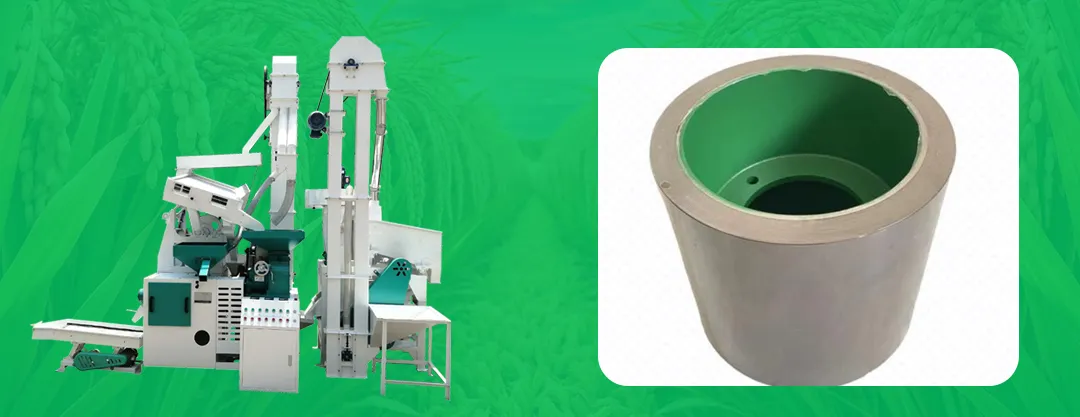
I. Rubber Rollers: The "Pioneer" of Husking
Function Analysis: Rubber rollers are the key components for husking in rice milling machines, directly contacting with rice grains and stripping the husks of rice grains through friction. They are mostly made of rubber or synthetic materials, with good wear resistance and elasticity.
Wear Causes: The wear degree of rubber rollers is closely related to the hardness, humidity, output and operation method of rice grains. Long-term friction operations will cause surface wear of rubber rollers, thereby affecting the husking effect and the integrity of rice grains.
Maintenance Methods:
Regularly inspect the wear condition of rubber rollers and replace them in time if severe wear is found to ensure the husking efficiency and rice grain quality.
Keep the surface of rubber rollers clean to avoid the attachment of impurities affecting the husking effect.
Pay attention to adjusting the gap and pressure of rubber rollers to ensure a moderate husking force and reduce unnecessary wear.
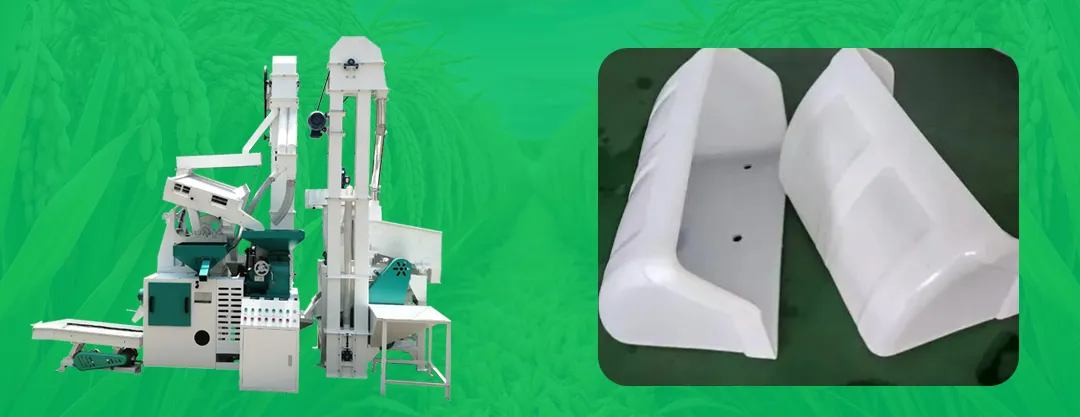
II. Conveyor Belts and Buckets of Elevators: The "Transporters" of Materials
Function Analysis: The combination of conveyor belts and buckets of elevators works to transport rice grains and other materials from a lower position to a higher position or a designated location, and is an indispensable material transportation system in rice milling machines.
Wear Causes: During high-intensity transportation, conveyor belts will gradually wear due to stretching and friction, and buckets will also deform or break due to the impact and wear of materials.
Maintenance Methods:
Regularly inspect the tightness and wear condition of conveyor belts, and adjust or replace them in time to ensure the transportation efficiency.
Clean impurities and residues on conveyor belts and buckets to avoid contamination of materials.
Inspect the fixation and wear degree of buckets and repair or replace damaged buckets in time.

III. V-belts: The "Transmitters" of Power
Function Analysis: V-belts, as the power transmission components of rice milling machines, are responsible for transmitting the power of the motor to each working component to ensure the normal operation of the entire machine.
Wear Causes: V-belts work under high stress and are prone to wear due to stretching, fatigue or aging, thereby affecting the power transmission efficiency.
Maintenance Methods:
Regularly inspect the tightness and wear condition of V-belts and adjust or replace them in time to ensure the stable transmission of power.
Avoid too tight or too loose belts to reduce unnecessary wear and energy consumption.
Clean debris and oil stains on belt pulleys to keep the belts clean and dry.
Function Analysis: V-belts, as the power transmission components of rice milling machines, are responsible for transmitting the power of the motor to each working component to ensure the normal operation of the entire machine.
Wear Causes: V-belts work under high stress and are prone to wear due to stretching, fatigue or aging, thereby affecting the power transmission efficiency.
Maintenance Methods:
Regularly inspect the tightness and wear condition of V-belts and adjust or replace them in time to ensure the stable transmission of power.
Avoid too tight or too loose belts to reduce unnecessary wear and energy consumption.
Clean debris and oil stains on belt pulleys to keep the belts clean and dry.
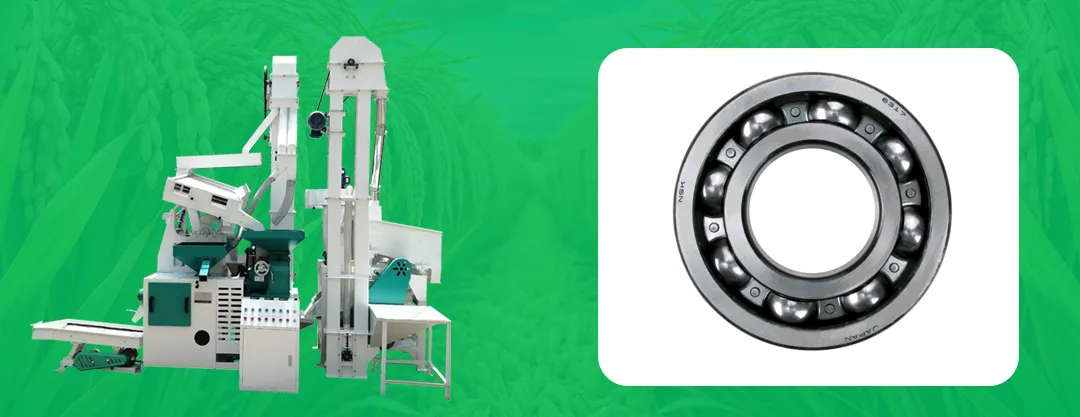
IV. Bearings: The "Heart" of Rotation
Function Analysis: Bearings are the support points of various rotating components in rice milling machines, and their performance directly affects the operation stability and service life of the equipment.
Wear Causes: During long-term high-speed operation, bearings will wear due to poor lubrication, impurity intrusion or overload operation. In severe cases, it may even lead to equipment failure.
Maintenance Methods:
Regularly inspect the lubrication condition of bearings and replenish or replace the lubricant in time to maintain a good lubrication state of bearings.
Clean impurities and oil stains around bearings to prevent their intrusion into the bearings and causing damage.
Pay attention to the load condition of bearings and avoid overload operation to reduce wear.
Regularly inspect the wear degree of bearings and replace them in time if any abnormality is found to avoid more serious failures.
In conclusion, although the consumable parts of rice milling machines seem insignificant, they play a crucial role in the operation of the entire equipment. Through scientific maintenance and upkeep, the service life of these consumable parts can be effectively extended, the overall performance and stability of rice milling machines can be improved, and contributions can be made to the high-quality development of the rice processing industry.
Vertical Sand Roller Rice Milling Machine: A Complete Guide to Installation, Use and Maintenance
The Historical Changes of Rice Milling Machines: The Leap from Ancient Techniques to Modern Technology

